



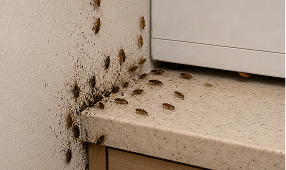












Your child’s asthma has gotten worse since the cockroaches came back. A headache fades when you leave the apartment and returns a few hours after you get home. Worries like these lead many California tenants to ask when a landlord is responsible for tenant health problems.
A landlord may be responsible if they were required to fix a dangerous condition, knew or should have known about it, and did not respond reasonably. That failure also has to have contributed to your illness.
Getting sick while you rent a home does not, on its own, show that the landlord did anything wrong. Illnesses have many possible causes, and the law looks for evidence tying a specific rental condition to your health problem and to the landlord’s conduct.
Knowing how responsibility works, and which records make that connection, puts you in a better position to decide whether to seek legal help for unsafe living conditions and what to keep in the meantime.
When Can a California Landlord Be Held Responsible for a Tenant’s Illness?
A California landlord can be held responsible for a tenant’s illness when the landlord’s failure to use reasonable care about a dangerous rental condition contributed to that illness. California’s general negligence statute makes property owners responsible for injuries caused by a lack of ordinary care in managing their property. Applying that rule to a tenant’s illness usually involves four questions:
- What the landlord was required to maintain. California sets minimum standards for rental housing. Under Civil Code section 1941.1, for example, a unit can be considered untenantable when areas under the landlord’s control are not kept clean, sanitary, and free of rodents and vermin. Other health and safety laws cover lead hazards and require carbon monoxide detectors in many homes.
- What knowledge standard applies. For areas under the landlord’s control, actual or constructive knowledge may be enough; for unsafe conditions in areas under the tenant’s control after possession, premises-liability rules generally require actual knowledge and the right and ability to correct the condition.
- How the landlord responded. A prompt repair that solves the problem counts in the landlord’s favor. Months of delay, or repeated treatments that never reach the source, may not be reasonable.
- Whether the failure contributed to legally compensable harm. For an illness-based claim, examples include a diagnosed illness or a preexisting condition that became worse; other habitability-related claims may involve different forms of compensable harm.
An attempted repair does not automatically clear a landlord, because the attempt could have come too late or missed the source of the problem. An unresolved hazard does not automatically prove landlord negligence either. The landlord may have had no reason to know about it, or too little time to fix it.
Habitability is the legal requirement that rental housing be kept safe and fit to live in. A habitability problem, such as a building-wide infestation, can require correction even when no one in the home has been sick. An illness-related damages claim needs more evidence: proof that the condition, and the landlord’s handling of it, caused or worsened a health problem.
Tenants can request repairs under California habitability requirements as soon as a problem appears, without waiting for anyone to become ill.
Which Rental Conditions Can Affect Tenant Health?
⚖Not sure if you have a case against your landlord?
Castelblanco Law Group has helped tenants recover over $350M in damages.
Get a legal case evaluation from Castelblanco Law Group →Many of the conditions behind tenant health complaints are things you can see or document: droppings in a kitchen drawer, bites that appear after sleeping, peeling paint in an older building, a gas heater no one has serviced in years. Each can pose a health risk, but a risk is different from proof that the condition caused a particular person’s illness.
| Rental condition | Possible health concern | What may need investigation at the property |
| Recurring cockroach infestation | Droppings and body parts can trigger asthma and allergy symptoms | Treatment history, entry points, and whether the problem spreads between units |
| Rodent infestation | Droppings and other pest allergens can trigger asthma and allergy symptoms | Nesting areas, gaps in walls and pipes, and sanitation in shared areas |
| Bed bug infestation | Itching, lost sleep, allergic reactions, and possible skin infections from scratching | Mattresses and furniture, adjoining units, and inspection and treatment records |
| Lead-based paint or lead dust | Harm to children’s development, often without visible symptoms | Age of the building, deteriorated paint, dust testing, and any work that disturbed paint |
| Carbon monoxide | Flu-like symptoms such as headache, dizziness, and confusion; high levels can be fatal, so suspected exposure is an emergency | Gas appliances, furnace and water heater venting, and working CO detectors |
California’s substandard housing statute lists infestations of insects, vermin, or rodents among the conditions that can make a building substandard.
That legal classification is separate from the question of whether a particular condition caused or worsened a tenant’s illness. For example, the EPA’s asthma trigger guidance identifies cockroaches and rodents as common indoor triggers. A single sighting is different from cockroaches that return after every treatment, and that recurring pattern is often what brings families to look for legal help with recurring cockroach infestations.
Bed bugs cause real distress, but the CDC’s bed bug overview states that they are not known to spread disease. The effects a doctor can document are bites, allergic reactions, skin infections from scratching, and lost sleep.
Lead is harder to detect. According to CDC information on lead exposure symptoms, most children with lead in their blood have no obvious symptoms, so tiredness, stomach complaints, or behavior changes cannot confirm or rule out exposure. A blood lead test ordered by a healthcare provider is the best way to find out, and an elevated result in a child living in an older rental is a common reason families contact lead poisoning attorneys.
Carbon monoxide has no color or smell, and the CDC’s carbon monoxide basics describe its symptoms as often flu-like. If a CO alarm sounds, or anyone in the home has symptoms such as headache, dizziness, or confusion, get everyone into fresh air right away and call 911. Questions about the heater, the landlord, or carbon monoxide poisoning attorneys can wait until everyone is safe.
How Do You Connect a Health Problem to Rental Conditions?

Connecting a health problem to rental conditions means reviewing three things together: medical records that show the health problem, property records that show the exposure, and a timeline that shows how the two line up. No single photograph, symptom, diagnosis, or inspection report establishes the whole claim.
California’s official jury instruction, CACI No. 430, asks whether the conduct was a substantial factor in causing the harm, meaning more than a remote or trivial factor. The conduct does not have to be the only cause.
Medical Records Show the Health Problem
Medical records document what happened to your health and when. Useful records include visit notes, diagnoses, prescriptions, and notes showing how treatment progressed. Test results can matter too, such as allergy or asthma testing, a child’s blood lead result, or emergency room testing after a suspected carbon monoxide exposure. Existing medical records can help document when symptoms, diagnoses, and reported exposures were recorded.
A doctor may confirm that your child has asthma, or that a rash came from insect bites, without saying where the exposure happened or whether the landlord was at fault. Tell your healthcare provider about every symptom, when it started, and what you have noticed at home, such as pests, peeling paint, or an old gas appliance.
Avoid guessing at the cause, so the record reflects what you observed and the medical conclusions come from your provider. Parents with lead exposure concerns in children should raise them directly with the pediatrician, who can decide whether testing is appropriate.
Property Records Help Establish the Exposure
Property records show what was present in the home, when it was there, and what the landlord did about it. Each type of record supports part of the picture and leaves other parts open:
| Record | What it can support | What it cannot establish alone |
| Code enforcement or health department inspection report | An official finding that a condition existed on a specific date | That the condition caused anyone’s illness |
| Maintenance requests and landlord replies | When the landlord learned of the problem and how they responded | Whether the response was reasonable under all the circumstances |
| Pest control treatment records | The type of pest, the areas treated, and how often treatment was needed | Whether the infestation was ever fully resolved |
| Lead or other environmental testing | Whether a hazard was present where and when samples were taken | Conditions in untested areas or at other times |
| Dated photos and videos | What the condition looked like and how long it lasted | Where the condition came from or how it affected health |
| Reports from neighbors | That a problem may extend beyond one unit | That every resident’s illness has the same cause |
Repeated pest treatment invoices for the same unit can show that an infestation kept coming back. Landlord responsibilities for pest control often depend on whether treatment solved the problem or only suppressed it for a few weeks.
A negative, limited, or inconclusive test result may still provide useful information, but its significance depends on what was tested, where, and when. For example, a dust sample collected right after a paint touch-up may not reflect earlier lead-dust conditions, and a carbon monoxide reading taken while the heater was off may not show what happened when it was operating.
Results like these should be considered alongside the timing of the suspected exposure and other records, and a qualified professional can help explain what the test does and does not establish.
A Timeline Helps Assess the Connection
A timeline puts medical and property records in order so the connection, or the lack of one, is easier to evaluate. A useful timeline records:
- The date you first noticed the condition
- When symptoms started, and when they improved or got worse
- Each medical visit, test result, or change in treatment
- Each complaint to the landlord and any reply
- Each pest treatment, inspection, or repair attempt
- Any time spent away from home, and how symptoms changed during it
Symptoms that ease while you stay somewhere else and return when you come home are worth recording. The NHS overview of sick building syndrome describes symptoms that tend to improve after people leave a building. The pattern is relevant but not conclusive. A seasonal allergy, a workplace exposure, or an unrelated illness can follow the same timing, so a doctor or expert may need to rule those out.
Here is a hypothetical example of how the records can fit together. A tenant reports cockroaches to the landlord in writing in March. At an April visit, her son’s asthma medication is increased, and the doctor notes the family’s report of pests at home. Pest control invoices show treatments in April, May, and July, and a city inspector cites the building for an infestation in August. During two weeks at his grandmother’s home in June, the boy needs his rescue inhaler less often.
The letter shows when the landlord was told, the medical notes show the health problem and what the family reported, and the invoices and citation show the infestation continued. None of those records proves a claim alone, but together they give an attorney and medical experts a clear sequence to evaluate.
What Should You Do if You Think Your Apartment Is Making You Sick?
Take these steps in order, starting with your health:
- Get medical care and make sure your household is safe. See a healthcare provider about symptoms, and seek emergency care for anything severe. Leave the home first if you suspect a carbon monoxide leak, and do not stay in hazardous conditions to gather proof.
- Tell the landlord about the specific condition. Put it in writing by text, email, or letter. Describe what you see and where, such as mouse droppings under the kitchen sink and in the pantry, and keep a copy of what you send.
- Ask for an inspection or professional assessment. If the landlord does not act, reporting unsafe rental conditions in California to local code enforcement or the health department can lead to an official inspection. A licensed pest control operator or certified lead inspector can also document conditions you cannot measure yourself. Avoid scraping suspected lead paint or handling hazardous materials on your own.
- Keep your records in one place. Store medical, property, and communication records together, with copies kept outside the unit.
- Talk to an attorney when conditions are serious and someone has been harmed. You do not need a complete file before asking for legal guidance, and an attorney can explain which additional evidence would help.
Immediate safety comes first. If a condition presents an urgent danger, such as suspected carbon monoxide exposure, leave the unit or affected area and seek appropriate emergency help. Temporarily leaving because of an immediate safety risk does not, by itself, end the tenancy.
Permanently moving out, ending the tenancy, or withholding rent are separate legal steps. California law permits certain remedies in some cases involving untenantable conditions, but specific requirements may apply. Co consider getting legal advice before making a decision that could affect your tenancy or rent obligations.
What Losses May Be Considered in an Illness-Related Claim?
When a landlord’s conduct is shown to have contributed to an illness, a claim may seek compensation for losses caused by that harm. Depending on the facts, those losses can include:
- Medical expenses, including the reasonable cost of reasonably necessary past care and future care you are reasonably certain to need
- Lost wages, and a reduced ability to earn in the future, when the illness affects your work
- Pain, physical discomfort, and emotional distress connected to the illness
- Out-of-pocket costs tied to care, such as travel to medical appointments
Receipts, pay stubs, and medical bills document what the illness cost you, but documentation alone does not establish a right to recover those amounts. Each loss still has to be reasonable and connected to harm the landlord’s conduct caused. Pursuing a claim over unsafe living conditions also involves deadlines and procedural steps that depend on your situation.
Frequently Asked Questions
What if I Already Had Asthma or Another Health Condition?
A pre-existing condition does not automatically end a claim. California law does not compensate for the earlier condition itself, but damages may be available when a landlord’s wrongful conduct made that condition worse. Records from before and after the exposure help show the change.
Does a Later Repair Resolve Responsibility for an Earlier Illness?
Not necessarily. A repair corrects the current condition, while a claim about earlier harm looks at how long the problem lasted and how the landlord responded before the fix. It is neither an automatic admission of fault nor an automatic end to a claim.
Can My Child Have a Claim if They Are Not Named on the Lease?
Possibly. A child’s failure to sign the lease does not by itself bar a negligence or premises-liability claim; whether the landlord owed and breached a duty still depends on the circumstances. Whether a child has a claim depends on the condition, what the landlord knew, and medical evidence of the child’s harm.
Can I Pursue a Claim if I Have Already Moved Out?
Yes, in many cases. Moving out does not by itself stop or reset applicable filing deadlines; the deadline depends on the claim, accrual rules, and any applicable tolling.
What if My Health Insurance Has Already Paid My Medical Bills?
Insurance payments do not automatically prevent a claim. Depending on the plan and applicable law, a health plan or Medi-Cal may have reimbursement rights, and recoverable past medical expenses may be affected by the amounts paid or still owed for the care. Save your insurer’s explanation of benefits statements.
Discuss Health Concerns Linked to Unsafe Housing With Castelblanco
When conditions in your rental seem to be affecting your health or your child’s, you do not have to sort through the records and the legal questions alone. Tell our team what the condition is, what health problems your family has experienced, and how the landlord responded after you reported it. We can review the facts, explain whether the matter falls within our practice, and discuss possible next steps in English or Spanish.
Castelblanco Law Group focuses on serious habitability matters for California tenants and families, including infestations, lead exposure, and carbon monoxide exposure connected to harm. Compensation is only part of what families come to us for. Many also want clear answers, an organized record of what happened, and accountability for conditions no family should have to live with.
Get a Free Case Review. No Fees Unless We Win
Tell us what's happening. One of our tenant attorneys will review your situation and get back to you within 24 hours.

Eric Castelblanco, Attorney/Founder
Eric Castelblanco, founder and managing attorney of Castelblanco Law Group, APLC, has championed tenants' rights for over two decades and has secured over $350 million in verdicts and settlements.
Castelblanoc Law also specializes in every aspect of personal injury accident cases, deliveri...