



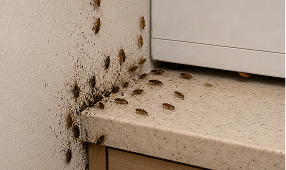




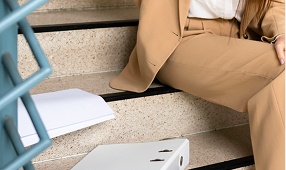





You reported the problem. Maybe you reported it three times. The roaches came back a week after treatment, the stair tread outside your door still moves when you step on it, and the last message you sent has gone unanswered for a month.
Landlord negligence in California describes a property owner’s failure to use reasonable care over a rental property when that failure leads to real harm. Not every ignored repair reaches that point, and an injury at a rental building does not settle the question of who is legally responsible for it.
If you are considering legal representation in a habitability case, two questions matter: what was your landlord required to do, and did their failure to act cause harm?
What Is Considered Landlord Negligence?
A landlord’s conduct may amount to negligence when the landlord fails to use reasonable care over the property and that failure causes legally recognized harm. Negligence, in plain terms, is a failure to use reasonable care in a situation where care was required. California’s standard negligence instruction asks whether the defendant was negligent, whether the plaintiff was harmed, and whether the negligence was a substantial factor in causing that harm, as set out in CACI 400.
Applied to rental housing, the question becomes practical. A landlord who owns and controls a building is generally expected to keep it in reasonably safe condition, to respond to problems the landlord knew about or reasonably should have known about, and to address hazards the landlord has the ability to correct.
Alongside that duty of care, California habitability laws require rental housing to be safe and fit to live in. Civil Code section 1941.1 identifies conditions that can make a unit untenantable, including inadequate weather protection, defective plumbing, and unsafe floors, stairways, or railings.
Three things often get treated as one problem, and they are not interchangeable.
| Term | What it means | What it does not settle on its own |
| Unsafe condition | A fact about the property, such as a split stair tread or an active infestation | Whether anyone is legally responsible for it |
| Habitability violation | A failure to meet California’s legal standards for a livable rental | Whether the failure caused someone harm |
| Negligence claim | A legal case requiring responsibility, an unreasonable failure to act, causation, and harm | Whether a particular tenant’s evidence supports every element |
The three overlap constantly. A cosmetic blemish alone may not create a safety hazard, but a cracked or uneven tile can present a tripping risk. A hazard nobody was ever told about, and that no reasonable inspection would have revealed, may not amount to a breach. An injury that happens at a rental property does not by itself make the landlord liable for it.
Common Examples of Landlord Negligence
⚖Not sure if you have a case against your landlord?
Castelblanco Law Group has helped tenants recover over $350M in damages.
Get a legal case evaluation from Castelblanco Law Group →A few situations come up repeatedly in California rental housing. Each one may support a claim depending on who was responsible for the condition, how the landlord responded, whether the condition caused the harm, and what that harm was. Severity and repetition matter more than the label attached to the problem.
Unresolved Infestations, Leaks, and Other Hazardous Conditions
A recurring infestation may raise questions about whether treatment addressed the underlying problem. For example, pests may return if entry points, moisture sources, or infestations in adjoining units remain unresolved. A landlord who treats one unit and ignores a building-wide problem, or who stops responding after the second complaint, has notice of a condition that keeps coming back.
Determining who is responsible for pest control requires looking at the cause of the infestation and each party’s maintenance obligations.
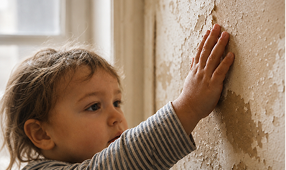
Persistent water intrusion belongs in the same category. A roof leak that reappears every winter, a pipe that has been patched three times, or a ceiling that stains and sags again after repair points to a problem that was managed rather than fixed. Older buildings can also carry hazards that need professional investigation rather than a tenant’s guesswork, including deteriorating lead-based paint in properties built before 1978.
Broken Stairs, Damaged Ceilings, and Unsafe Common Areas
Shared spaces are where control and responsibility are clearest. A handrail that pulls away from the wall, a stair tread that has split, a walkway light that has been out for months, or a section of ceiling that has begun to separate after a leak all sit in areas the landlord or management company maintains directly. Repairs in these shared areas are generally the landlord’s responsibility, and tenants may have no safe alternative route around the hazard.
Not every crack or worn surface is dangerous, and cosmetic wear on its own says little. What tends to matter is whether the defect created a real risk of injury, how long it stayed that way, and whether anyone raised it. After an injury involving one of these hazards, a premises liability attorney can examine who controlled the area, what the owner knew, and whether the response was reasonable.
Neglected Plumbing, Heating, Electrical Systems, and Locks
Essential systems carry specific obligations in California. Civil Code section 1941.1 requires working plumbing and gas facilities, a water supply capable of producing hot and cold running water, heating facilities kept in good working order, and electrical lighting and wiring that meets the applicable codes. Health and Safety Code section 17926 requires carbon monoxide devices in dwelling units with a fossil fuel appliance, a fireplace, or an attached garage, which is why a disabled detector next to an aging wall heater is a serious matter rather than a maintenance detail.
Security features have their own rules. Civil Code section 1941.3 generally requires operable deadbolt locks on main swinging entry doors and security or locking devices on qualifying windows, subject to specified exceptions. A broken lobby door or a lock left unrepaired after a break-in may become relevant to a negligent security claim if someone is harmed.
How to Prove Landlord Negligence: Four Essential Elements
Proving landlord negligence generally requires evidence supporting four legal elements:
- Duty of care. The landlord was responsible for the property or the condition.
- Breach. The landlord failed to use reasonable care in responding to it.
- Causation. That failure was a substantial factor in causing the harm.
- Damages. The harm is a kind the law recognizes, and it can be documented.
The phrase “four proofs” causes some confusion. They are four legal elements, not four documents you need to produce.
A claim can face difficulties even when some elements are well supported. A tenant may have excellent records of complaints and still face a dispute over whether the condition caused the injury. Another may have a clear injury and thin proof that the landlord ever knew about the hazard. Knowing which element is weakest usually tells you what evidence to preserve next.
Duty of Care: Establishing the Landlord’s Responsibility
A landlord who owns or controls residential property is generally required to use reasonable care to keep it in reasonably safe condition, which can include inspecting for hazards and repairing them within a reasonable time. California’s jury instruction on a property owner’s duty, CACI 1006, frames the question around control of the area, knowledge of the condition, and the opportunity to correct it.
Stairwells, hallways, laundry rooms, parking areas, and roofs usually remain under the landlord’s control throughout the tenancy. Conditions inside a unit can be different, since access is limited and some problems depend on notice from the tenant, though building systems that serve the unit generally stay with the landlord.
Leases and property records help establish who owns the building, who manages it, and what each party agreed to handle. A lease is useful evidence of those relationships. A lease can establish additional responsibilities, but it is not the sole source of a landlord’s duties; statutes and case law also impose obligations.
Breach of Duty: Showing an Unreasonable Failure to Act
Breach turns on the response rather than on the condition alone. The landlord’s conduct gets measured against what reasonable care required in those particular circumstances, which depends on what the landlord knew, how serious the condition was, how long it lasted, and whether the steps taken actually addressed the problem. A week’s delay on a slow drip and a week’s delay on exposed wiring are not judged the same way.
Knowledge comes in two forms. Actual knowledge may be shown by evidence that the landlord received a complaint or observed the condition. Constructive knowledge concerns hazards the landlord reasonably should have discovered, such as through an inspection required in the circumstances. Which standard applies can depend on control of the area and the landlord’s right and ability to correct the condition. Records that tend to establish either form of knowledge include:
- Dated repair requests by text or email, plus any reply acknowledging the problem
- Work orders, invoices, and the dates a contractor actually attended
- Inspection findings or code enforcement notices
- Building maintenance logs
- Complaints neighbors made about the same condition
Written notice strengthens a case, and California does not treat it as an absolute requirement in every situation. There is also no single repair deadline that applies to every condition, because urgency depends on the hazard. If your landlord will not make repairs, the available next steps depend on the condition, the notice already given, and the response so far.
Causation: Connecting the Landlord’s Failure to the Harm
Showing a hazard existed and showing you were harmed are separate points. Neither one, by itself, links the landlord’s failure to the injury. California uses a substantial factor test, explained in CACI 430, which asks whether the conduct contributed materially to the harm rather than playing a trivial part in it. More than one cause can be a substantial factor in the same incident.
Consider a tenant who falls on a broken exterior step. A photograph taken after the fall can help document the step’s condition, but it does not by itself establish when the defect arose or how the fall happened. What connects the two is the surrounding record: the repair request sent six weeks earlier, the neighbor who saw the fall, the urgent care record from that afternoon describing how the injury happened, and the maintenance log showing no work order was ever opened.
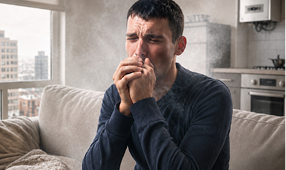
Illness-related causation follows the same logic with medical questions layered on top, since symptoms can have several explanations and exposure has to be tied to conditions in the unit. Medical records, appropriate testing, and the timing of symptoms may help assess whether rental conditions contributed to an illness.
Damages: Documenting Harm and Potentially Recoverable Losses
A negligence claim requires legally recognized harm, not only frustration with how the landlord behaved. Depending on the facts and the legal basis for the claim, recoverable losses may include medical expenses, lost earnings, damaged or destroyed belongings, and noneconomic harm such as pain and suffering.
Documentation matters from the first day. Treatment records and bills support medical costs, pay records and employer correspondence support lost income, and photographs with receipts or replacement quotes support property loss. Keeping a dated account as events happen can preserve details that may be difficult to recall later.
Proving a loss happened and proving the landlord is responsible for it are two different things. A tenant can have flawless records of every expense and still face a dispute over responsibility for the underlying condition. Anyone promising a specific figure, a guaranteed rent refund, an automatic right to relocation costs, or punitive damages before reviewing the facts is getting ahead of what the law supports.
What to Do When Your Landlord Leaves Unsafe Conditions Unresolved
Practical steps now protect both your safety and your options later. Reporting the condition to an agency and talking to an attorney are not sequential requirements, and you do not need to exhaust every administrative route before asking whether you have a claim.
Address Immediate Safety Risks
Safety comes before documentation. If you smell gas, hear a carbon monoxide alarm, see exposed or arcing wiring, or notice a ceiling or balcony beginning to give way, leave the area and call 911 or the utility’s emergency line. Fire departments and gas utilities respond to those calls.
Do not open panels, test wiring, climb onto damaged structures, or investigate a suspected gas leak yourself. Do not wait for a landlord to return your call during an emergency; get to safety and follow emergency responders’ instructions.
Send Written Notice and Keep a Record of the Response
A useful notice is specific. Name the condition, say exactly where it is, state when you first noticed it and when it recurred, describe what has already been tried, and ask for a particular repair. Text and email work, and both carry a timestamp automatically.
Keep the original message and everything that follows, including voicemails, entry notices, and the contractor’s visit dates. If someone promises a repair verbally, send a short message confirming what was said. A deadline you set yourself is reasonable to include, and it does not by itself create the landlord’s legal deadline, which depends on the hazard and the law that applies to it.
Report Unresolved Hazards to the Appropriate Local Agency
The right agency depends on where you live and what the problem is. Code enforcement or a building and safety department handles structural and housing code violations in many cities, while a county environmental health or public health department often handles vermin, sanitation, and similar conditions.
An inspection report can provide an independent record of observed conditions, but its value depends on what was inspected, when, and what the findings establish. When reporting unsafe rental conditions in California, describe the hazard, identify its location, and include the repair requests and responses you have kept.
The reporting route depends on the property and the type of complaint. USAGov’s tenant rights guidance directs tenants to HUD’s Multifamily Housing Complaint Line when HUD insures or manages the property; that particular route does not apply to every rental. California also provides remedies such as repair and deduct and rent withholding, each with strict statutory conditions attached. Getting those conditions wrong can create problems of its own, so confirm the requirements before using either one.
Pursuing a Landlord Negligence Claim in California
A tenant may be able to pursue a landlord negligence claim when the available evidence supports each of the required legal elements. Whether you can sue your landlord for negligence depends on the strength of that evidence and on the legal basis that fits the facts, which is what a case review is for.
Most matters begin with an evaluation of the records: your complaint history, the condition itself, inspection or code enforcement findings, and any medical or repair documentation. Where the facts support a claim, an attorney may pursue negotiation, litigation, or both.
Settlement discussions can occur before or after filing, and a lawsuit may need to be filed to preserve a deadline while discussions continue. Suing a landlord over unsafe living conditions involves choosing the appropriate court, filing and serving the required documents, and meeting the deadlines that apply to the claim.
How difficult a negligence claim is to establish depends on the legal issues, available evidence, and disputed facts. An attorney can assess what further investigation may help and explain the uncertainties that remain.
Frequently Asked Questions About Landlord Negligence
Can a Lease Waive the Landlord’s Responsibility for Negligence?
California law prohibits certain residential lease waivers of duties to prevent injury or property damage. The clause’s wording matters; a settlement or release signed after a dispute requires separate review.
Is the Landlord Still Responsible if a Contractor Handled the Repairs?
Hiring a contractor does not automatically remove a landlord’s responsibility for safe conditions. Liability depends on the duty involved, the work, and the harm; the landlord and contractor may share responsibility.
What if the Landlord Says I Contributed to the Damage or Injury?
A landlord’s allegation alone does not establish tenant fault. If evidence shows your negligence contributed to the harm, California may reduce damages proportionately rather than automatically bar recovery. The allocation depends on the facts.
Discuss Unsafe Rental Conditions With Castelblanco Law Group
Living with a condition nobody will fix wears people down, and the uncertainty about whether it counts legally is often the hardest part. An initial conversation can help identify whether the situation warrants further legal review.
Castelblanco Law Group represents California tenants and families in serious habitability matters and in injury cases connected to unsafe rental housing. Our team works in English and Spanish, and we will tell you plainly whether your situation falls within what we handle.
Tell us what is happening in your home and we will review the facts with you. Discuss your unsafe housing concerns with our team and find out what your options may be.
Get a Free Case Review. No Fees Unless We Win
Tell us what's happening. One of our tenant attorneys will review your situation and get back to you within 24 hours.

Eric Castelblanco, Attorney/Founder
Eric Castelblanco, founder and managing attorney of Castelblanco Law Group, APLC, has championed tenants' rights for over two decades and has secured over $350 million in verdicts and settlements.
Castelblanoc Law also specializes in every aspect of personal injury accident cases, deliveri...