














Disclaimer: The topics discussed in this blog are intended solely for informational purposes. They do not imply or guarantee that Castelblanco Law Group specializes in or accepts cases related to the subjects covered.
Some problems in a rental are irritating. Others make the home genuinely unsafe to live in, and California law treats those differently. Your rights if your house is uninhabitable depend on how serious the condition is, what your landlord was told, and how long the problem has gone unrepaired.
What happens when an apartment becomes uninhabitable is rarely automatic. A serious defect does not cancel rent on its own, does not end a lease by itself, and does not guarantee a payout. What it may do is open several separate routes, each with its own requirements: repairs pushed through a local inspector, a reduction in rent, a statutory repair remedy, ending the tenancy, or a claim for harm the conditions caused.
Which route fits depends on the facts, and severe conditions such as untreated infestations, lead exposure, carbon monoxide, or dangerous structural defects are the ones where legal help for unsafe rental conditions usually makes the most difference.
When Is a Rental Home Considered Uninhabitable?
A rental is generally considered uninhabitable when a condition seriously affects health or safety, or removes something the law treats as essential. A broken cabinet door does not meet that bar. A sewage backup across the bathroom floor usually does.
“Habitability” is the legal requirement that rental housing be kept safe and fit to live in. California sets a minimum standard for every residential tenancy, and California habitability standards apply whether or not a landlord agrees the problem is serious. Conditions that commonly raise the question include:
- Sewage backups, a non-working toilet, or no running water.
- No heat, no hot water, or an electrical system with exposed or damaged wiring.
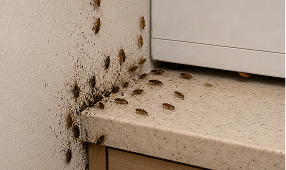
- Cockroach, bed bug, or rodent infestations that continue after treatment.
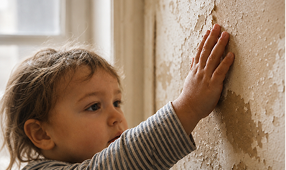
- Deteriorating paint in a building constructed before 1978, where lead dust becomes a risk to young children.
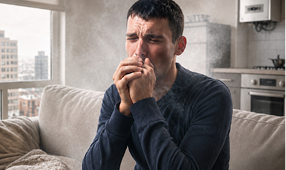
- Faulty gas appliances, blocked venting, or missing smoke and carbon monoxide alarms.
- Structural problems such as soft flooring, unstable stairs, or a missing balcony railing.
Sanitation failures sit on their own threshold. Missing receptacles, waste that is never collected, and contamination spreading into food storage areas each count toward it, and examples of unsanitary living conditions show where that line usually falls in practice.
One recent change matters for newer tenancies. For leases entered into, amended, or extended on or after January 1, 2026, AB 628 added a working stove and a working refrigerator to the features a unit needs to be legally tenantable. In a covered tenancy, a landlord refusing to repair a supplied refrigerator is no longer a simple amenity disagreement.
What to Do if Your House or Apartment Becomes Uninhabitable
⚖Not sure if you have a case against your landlord?
Castelblanco Law Group has helped tenants recover over $350M in damages.
Get a legal case evaluation from Castelblanco Law Group →The order matters here. Safety comes first, then the record, then any decision about rent, repairs at your own expense, or moving out. A hazard that could hurt someone today gets handled before anything else, and building a paper trail never justifies staying put.
Address Immediate Safety Risks
If you smell gas, a carbon monoxide alarm sounds, wiring is arcing or smoking, or part of the structure looks ready to give way, leave and call 911 or the gas utility. No photograph is worth staying in a unit that may be dangerous tonight.
Leaving temporarily for safety does not, by itself, end your tenancy. Once you are safe, clarify in writing that your departure is temporary. Ending the tenancy and your future lease obligations requires a separate assessment of the legal requirements.
Document the Conditions and Notify Your Landlord
Evidence collected while the problem is happening is far more persuasive than a description written months later. Keep the following in one place:
- Dated photos or videos showing the problem and where in the home it is.
- A note of when the condition started and how it affects your use of the home, including rooms you have stopped using.
- Every repair request, proof of how it was sent, any reply, and what was actually done on each visit.
- Receipts for related expenses, plus any medical or other records of harm already caused.
A useful repair request is short and specific. Name the condition, name the room, say when it began, say what has already been tried, and ask for a repair. Send it by text, email, or letter and keep a copy. Civil Code Section 1942 recognizes written or oral notice, so a phone call still counts, but a landlord who later denies ever hearing about the problem is difficult to contradict without something in writing.
Request an Inspection if Serious Problems Remain Unresolved
When a landlord has been told and nothing changes, the next step is usually your local code enforcement office, building department, or health department. An inspection may lead to a violation notice and repair deadline. The findings provide independent documentation that can support your account of the conditions. Ask for copies of the inspection findings and any notice issued to the owner, and keep them with the rest of your file.
No agency can promise a particular response time or a particular outcome, and some complaints are closed without a violation being recorded. File the complaint anyway. Even a closed file shows you raised the problem on a specific date.
California law also protects tenants who report. The state Attorney General’s Know Your Rights guide on habitability sets out that a landlord may not retaliate for requesting repairs, reporting conditions to a government agency, or seeking legal help. Save any message that reads as a threat, including sudden rent increases or notices that arrive shortly after you complain. A landlord who refuses outright is a different problem from one who is slow, and when your landlord ignores repair requests, the options that remain open narrow to the formal ones.
How Long Does a California Landlord Have to Make Repairs?
There is no single deadline. The time a landlord has depends on how serious the problem is and what the circumstances require, and a gas leak and a slow-draining sink are not on the same clock.
The figure most tenants have heard is 30 days, and it is narrower than it sounds. Civil Code Section 1942 provides that a tenant who uses the repair-and-deduct remedy after the 30th day following notice is presumed to have waited a reasonable time. That presumption is rebuttable, it attaches to that specific remedy, and it expressly does not prevent a tenant from acting sooner when the circumstances require shorter notice. It is not a permission slip for a landlord to leave a dangerous condition for a month.
| Type of problem | What a reasonable response generally looks like |
| Suspected gas leak, sounding carbon monoxide alarm, exposed live wiring | An immediate safety response: leave danger and contact emergency services or the appropriate utility from a safe location |
| No heat, no hot water, no running water, or no working toilet | Urgent assessment and repair; the reasonable time depends on the severity, conditions, and work required |
| A continuing infestation or other condition needing specialist treatment | A prompt start, then follow-through judged by whether the problem actually stops |
| A defect that reduces comfort without affecting health or safety | Longer, and generally outside the habitability rules altogether |
Do You Have to Pay Rent if Your Home Is Uninhabitable?
An uninhabitable condition does not automatically erase your rent obligation, but qualifying conditions may justify reduced rent or withholding some or all of the payment.
Two remedies get confused here, and they work differently:
- Rent reduction, or abatement. Recognition that you did not receive the full value of what you were paying for. It is normally settled through negotiation, a claim, or a court, and often resolves after the fact rather than in the month the problem occurs.
- Rent withholding. Holding back some or all of the rent when the legal requirements are met. The risk is real, because a landlord may respond with a nonpayment case, and a court decides afterwards whether the conditions justified the decision.
Which one may apply depends on how severe the condition is, whether you lost the use of part of the home or all of it, and whether the requirements attached to that specific remedy were met.
If you are considering holding back payment, keep the money available rather than spending it, and understand that putting rent into a separate account does not by itself make withholding lawful. California’s Department of Real Estate guidance on rent withholding and repairs sets out how limited these remedies are in practice. Speak with an attorney before you change what you pay.
Other Options When Your Landlord Fails to Restore Habitable Conditions
Beyond reporting and negotiating, California recognizes several remedies for tenants living with serious unrepaired conditions. They are not interchangeable, and none becomes available automatically. Each has its own qualifying conditions, its own notice requirements, and its own risks.
When Repair and Deduct May Be Available
Repair and deduct lets a tenant pay for a qualifying repair and subtract the cost from rent. Four limits apply at the same time:
- The condition must be one the landlord is responsible for.
- The landlord must have received notice and a reasonable opportunity to repair.
- The cost may not exceed one month’s rent.
- The remedy may not be used more than twice in any 12-month period.
The option also falls away where the tenant caused the problem. A condition created by you, your household, or a guest can remove it, as can conduct that substantially interferes with the landlord’s ability to carry out the repair. Getting the sequence wrong can leave you paying for work you cannot recover, so check your own situation against California’s repair-and-deduct requirements before you spend anything.
When You May Be Able to End Your Lease
Leaving a home that is unsafe and ending your future obligations under the lease are two separate situations You can leave a home for safety reasons at any time. The second depends on whether the legal requirements for terminating the tenancy were met.
Section 1942 provides a route: a tenant who gives notice and waits a reasonable time without repair may vacate and be discharged from further rent obligations. Courts also recognize constructive eviction, where conditions become so serious that the tenant is effectively forced out. Neither is as broad as online advice suggests, and no California rule allows every tenant with a complaint to walk away penalty-free. Before giving notice, read through what is involved in ending a California lease because of uninhabitable conditions and get advice on your own facts.
When Uninhabitable Conditions May Support a Claim for Compensation
A legal review makes the most sense when a condition was reported, went unrepaired, and cost you something measurable. Depending on the facts, potentially recoverable losses may include medical treatment, damaged or discarded property, out-of-pocket costs such as replacement appliances or temporary lodging, and the reduced value of what you paid rent for. Physical injury is not a requirement for every habitability remedy, though it changes what a claim may cover.
Whether a particular situation supports a claim depends on the condition, the notice, the landlord’s response, and the harm that followed. Pursuing a claim over unsafe living conditions hinges on those four elements together rather than on how bad the condition looks on its own.
What Happens if You Need Temporary Housing During Repairs?
Temporary housing arrangements depend on why you are leaving, who is arranging the stay, and whether an enforcement agency is involved. There is no general California rule requiring a landlord to book a hotel whenever a repair is disruptive.
If it is safe to plan ahead, clarify these questions in writing before leaving. In an emergency, leave first and address them once you are safe:
- Is the departure temporary, or is the tenancy ending?
- Who is arranging the accommodation?
- Who is paying, and is it a reimbursement or a direct booking?
- Does rent continue, pause, or reduce while you are out?
Rent treatment is the point that causes the most trouble later, and tenant rights during major repairs set out how costs and rent are usually handled when a unit is partly or wholly unusable.
Displacement under an official order works differently. Where a local enforcement agency orders a unit vacated because violations endanger residents’ immediate health and safety, Health and Safety Code Section 17975 provides relocation benefits for eligible displaced tenants, subject to statutory exceptions. The enforcement agency determines eligibility. Section 17975.4 sets out exceptions, including conditions caused or substantially contributed to by the tenant or a guest, and certain events beyond the owner’s control.
Frequently Asked Questions
Do I Still Have Rights if the Problems Existed Before I Moved In?
Yes. A landlord’s duty to keep a rental safe and fit to live in is not erased because the condition already existed when you signed the lease or moved in.
Does My Rental Have to Be Officially Condemned Before I Can Exercise My Rights?
No. Habitability rights and most remedies do not depend on a formal condemnation or order to vacate. Certain benefits, such as statutory relocation payments, do require an official order from a local enforcement agency.
Do I Have Habitability Rights Without a Written Lease?
Usually yes. An oral rental agreement is still a tenancy, and habitability protections apply. A guest with no rental agreement may not have the same rights, so rent receipts and landlord messages matter as proof.
Can I Report Uninhabitable Conditions if I Am Undocumented?
Yes. California law bars landlords from threatening to disclose immigration status to pressure a tenant to leave, or from retaliating by disclosing it to law enforcement. Reporting unsafe conditions is not conditioned on status. Immigration matters fall outside our practice.
Discuss Your Housing Conditions With a California Habitability Attorney
If the conditions in your home are serious and your landlord has been told and has not fixed them, it is worth finding out whether the situation falls within what we handle. Our work centers on severe habitability matters: cockroach and bed bug infestations, rodent infestations, lead exposure, carbon monoxide exposure, and injuries connected to dangerous conditions in rental housing.
Not every housing problem is a legal case, and the right first step is sometimes a call to a local inspector or a tenant assistance organization rather than a lawyer. We will tell you which we think it is. Our California habitability attorneys can review the condition, the notice you gave, and the harm involved, and explain what options may realistically be open to you.
Tell us what is happening in your apartment. You can reach our California habitability team and describe the situation in English or Spanish.
Get a Free Case Review. No Fees Unless We Win
Tell us what's happening. One of our tenant attorneys will review your situation and get back to you within 24 hours.

Eric Castelblanco,