
















Disclaimer: The topics discussed in this blog are intended solely for informational purposes. They do not imply or guarantee that Castelblanco Law Group specializes in or accepts cases related to the subjects covered.
California tenants deserve a safe place to call home. When things break, your landlord usually holds the responsibility to fix them promptly. Sometimes, slumlords ignore repair requests and leave families living with unsafe conditions. State laws provide a specific remedy for this frustrating situation. In some cases, you can pay for critical repairs yourself and subtract that cost from your next rental payment.
This process requires following strict rules to avoid the risk of eviction. In this guide, we explain how California’s repair-and-deduct law works, when it is safe to use, and when it may be time to speak with a slumlord lawyer about enforcing your rights.
Quick Answer: What Is the Repair and Deduct Law in California
California Civil Code Section 1942 outlines the repair-and-deduct law that California residents rely on. This statute allows a renter to spend up to one month’s rent to fix serious habitability defects. You must notify the landlord first. The owner gets a reasonable time to address the problem. If they do not act, you can pay for the work. Then, you subtract that specific amount from your next rent check. Tenants may only use this remedy twice in any twelve months. It applies strictly to issues affecting health or safety.
Understanding California’s Repair and Deduct Law in Detail
⚖Not sure if you have a case against your landlord?
Castelblanco Law Group has helped tenants recover over $350M in damages.
Get a legal case evaluation from Castelblanco Law Group →Rental agreements imply a warranty of habitability. This means your home must be fit for human occupation. When owners breach this duty, the law provides remedies.
California Civil Code Section 1942 Explained
Section 1942 acts as a self-help remedy. It empowers tenants to resolve maintenance failures without waiting indefinitely. The law places specific boundaries on this power. You cannot spend unlimited funds. The cap is one month’s rent. If your monthly payment is $2,000, you cannot spend $2,001 on the fix.
This code section also mandates prior notice. You cannot simply fix a leaky pipe and surprise the owner with a smaller check. Communication must happen first. Furthermore, the damage cannot be your fault. If you or your guests broke the window, you pay for it separately. This law only covers dilapidations caused by normal wear or structural failure.
How Repair and Deduct Differs From Rent Withholding
Many people confuse these two strategies. Withholding rent for repairs in California is a much more aggressive action. Withholding involves stopping payment entirely until the landlord fixes the defect. You do not spend the money on repairs. Instead, you usually set it aside in a separate account.
Repair and deduct involve active spending. You use your money to solve the issue immediately. Then you reimburse yourself by paying less rent. Withholding carries higher legal risks. If a judge decides the defect was minor, you could face eviction for nonpayment. Deducting repair costs is generally safer if you follow the dollar limits. The financial stakes are lower because you still pay the majority of your rent.
When Can a Tenant Legally Use Repair and Deduct
Not every annoyance justifies using this legal tool. A squeaky door hinge usually does not qualify. The problem must breach the warranty of habitability.
Habitability Issues That Qualify
California Civil Code 1941.1 defines what constitutes a habitable rental unit and clarifies the meaning of habitability in California. To use the California repair-and-deduct remedy, the defect must be substantial. It must impact your health or safety.
Common qualifying issues include:
- Broken waterproofing or weather protection on the roof and walls.
- Plumbing facilities that do not work or leak sewage.
- Lack of hot and cold running water.
- Broken heating facilities.
- Electrical lighting or wiring that is unsafe.
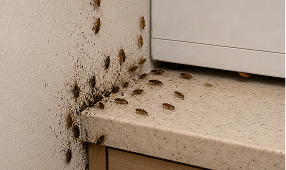
- Unclean grounds full of trash, rodents, or vermin (serious pest infestations).
- Insufficient trash receptacles.
- Floors, stairways, and railings in disrepair.
Paint that is peeling solely for aesthetic reasons does not count. Peeling lead-based paint that creates a ‘lead hazard’ qualifies. The distinction lies in safety versus preference.
Required Notice to the Landlord
Notification is the first critical step. You must tell the property owner or manager about the dilapidation. State law permits oral or written notice to the landlord or their agent. However, reliance on verbal conversation is risky. Written documentation creates a paper trail, and consumer agencies such as Los Angeles County’s Department of Consumer and Business Affairs also stress the importance of making repair requests in writing.
Send a letter, email, or text message. Ensure you have proof of delivery. A certified letter works best for legal evidence. The notice must specifically describe the problem. It should explicitly state that you intend to use the repair and deduct remedy if they ignore the request. This puts the landlord on alert. They cannot claim ignorance later in court.
Reasonable Waiting Period Defined
After notifying the owner, you must wait. The law requires giving the landlord a “reasonable time” to fix the defect. California statutes generally presume 30 days is reasonable, and statewide resources like the California Tenants Guide often use this time frame as a benchmark for non-emergency repairs.
This 30-day window is a guideline, not an absolute rule. The 30-day presumption runs after notice to the landlord or agent; shorter notice may suffice if circumstances require. If the month passes and the heater remains broken, you can proceed. Acting too soon puts you at risk. A judge might decide you did not give the owner a fair chance. Patience protects your legal standing.
Emergency vs Non-Emergency Repairs: Do the Timelines Change
The 30-day presumption applies to standard repairs. Emergencies change the calculation. A “reasonable time” becomes much shorter when safety is at immediate risk.
Imagine your toilet backs up with sewage. Waiting a month is impossible. In such a severe case, reasonable notice might be 24 to 48 hours. A broken furnace in the middle of winter also requires urgent action. The timeline shrinks to fit the severity of the danger.
If you act quickly, document why the situation was urgent. Take photos of the hazard. Keep records of temperature levels if the heat fails. You need to prove that waiting 30 days would have compromised your health.
Legal Limits and Restrictions Tenants Must Follow
Using this remedy requires strict adherence to the rules. Stepping outside these boundaries leaves you vulnerable to eviction lawsuits.
The One Month Rent Rule and Frequency Limitations
Financial caps are strict. You cannot deduct more than one month’s rent. If your rent is $1,500, the repair bill cannot exceed $1,500. If the roof costs $5,000 to fix, you cannot use this specific remedy for the full amount.
Frequency restrictions also apply. You can use this remedy only twice in any 12 months. This clock does not reset with the calendar year. It looks back at the rolling 12 months before the current deduction. If you fixed a sink in January and a window in March, you cannot use this tool again until the following January.
Repairs That Do Not Qualify
Minor inconveniences fall outside this statute. A cracked tile that presents no tripping hazard is cosmetic. Faded carpet does not affect habitability.
Additionally, you cannot use this law if you caused the damage. Did your dog chew through the door frame? You must pay for that. Did you flush heavy items that clogged the toilet? That is your responsibility. The defect must arise from ordinary wear and tear or acts of nature. Landlords are not responsible for fixing damage resulting from your negligence or misuse.
Risks of Improper Use (Eviction, Legal Action)
Mistakes can lead to eviction proceedings. If you deduct money for a non-qualifying repair, the landlord can treat it as unpaid rent. They may serve a three-day notice to pay rent or quit under Code of Civil Procedure §1161(2).
If you fail to pay the balance, they can file an unlawful detainer lawsuit. You would then have to prove in court that your deduction was valid. Litigation consumes time and money. Losing an eviction case damages your credit and rental history. Always ensure your situation meets the legal criteria before withholding any funds.
Step-by-Step Guide: How to Use Repair and Deduct in California
Following a structured process reduces your risk. Do not skip steps. Documentation saves you if a dispute arises later.
Step 1: Document the Problem
Start by gathering evidence. Take clear photos of the issue from multiple angles. Record videos if the problem involves sound or movement, like a dripping leak.
Write down when the problem started. Keep a log of how it affects your daily life. Does the broken window let in rain? Note every time it rains and the resulting damage. This evidence establishes the severity of the habitability breach.
Step 2: Notify the Landlord in Writing, Plus Sample Letter
Send a formal request for repairs. Include the date, your address, and a description of the defect.
Sample text structure:
“Dear [Landlord Name],
I am writing to report a broken [Item] in my unit at [Address]. This issue affects my health and safety because [Reason]. Please arrange for repairs immediately. If this is not fixed within a reasonable time, I intend to exercise my rights under California Civil Code Section 1942 to repair the defect and deduct the cost from my rent.
Sincerely, [Your Name]”
Keep a copy of this letter. Send it via certified mail with a return receipt. This proves the landlord received your warning.
Step 3: Wait a Reasonable Time
Mark your calendar. Give the landlord time to respond. If it is not an emergency, wait the full 30 days.
During this period, the landlord might send a handyman. Allow them access to the unit. If you unreasonably refuse lawful entry after proper notice, it can undercut a claim that the landlord failed to repair. Cooperation shows you are acting in good faith. If they attempt a fix but fail, the clock does not necessarily restart, but you should document the failed attempt.
Step 4: Make the Repair
Once the waiting period expires, you can hire help. You generally have two choices: hire a licensed professional or do it yourself. Hiring a professional is usually safer.
If you hire a plumber or electrician, get a detailed invoice. The bill should state exactly what they fixed. It must show the cost of labor and parts separately. Avoid paying cash without a receipt. You need a paper trail for every dollar spent.
Step 5: Deduct and Retain Proof
Pay your contractor first. Then, calculate your next rent payment. Subtract the exact cost of the repair from the total rent due.
Write a check for the balance. Attach a copy of the receipt and a brief note explaining the deduction. Do not send the original receipt; keep that for your records. Send this package to your landlord at the usual time and place. Ensure the note references your previous demand letter. This connects the deduction to the prior notice.

Alternatives to Repair and Deduct
Sometimes the repair costs too much. Or you may have already used the remedy twice this year. Other legal paths exist, and statewide resources such as the Attorney General’s Know Your Rights: Habitability guide describe additional options for tenants living with serious defects.
Withholding Rent in California
Can a tenant withhold rent for repairs in California? Yes, but proceed with extreme caution. This tactic works best for severe issues that make the unit unlivable and raise questions about tenants’ rights when a house is uninhabitable.
You do not spend the money. You hold it until the landlord makes repairs. Most tenant lawyers recommend putting this money into an escrow account. This proves you have the funds and aren’t simply broke. Withholding often triggers an eviction notice. You must be ready to defend your choice in court. The defect must be substantial enough to justify not paying for the dwelling.
Reporting to Housing Authorities
Local government agencies enforce building codes. You can contact your local health department or building inspector. They can inspect your apartment.
If they find code violations, they issue a citation to the property owner. This order forces the landlord to fix the problem. It creates official documentation of the defect. Landlords often respond quickly to government orders to avoid fines. This method carries less financial risk for you than withholding rent and is usually part of a broader strategy for tenants who want to understand how to deal with a slumlord who refuses to follow the law.
Filing a Lawsuit or Seeking Mediation
You can sue for damages in Small Claims Court. You might ask for a retroactive rent reduction for the period during which you lived with the defect. This is valid even if you moved out.
Mediation offers a softer approach. A neutral third party helps you and the landlord reach an agreement. Many communities offer free or low-cost mediation services for housing disputes. This avoids the hostility of a courtroom battle. It can preserve the relationship if you plan to stay.
When to Talk to a Tenant Lawyer
Self-help remedies have limits, and complex situations often require professional legal advice. At Castelblanco Tenant Law Group, we know the fight against substandard housing isn’t just about repairs — it’s about restoring a sense of security for entire families.
If You Are Facing Retaliation or Eviction
Landlords cannot punish you for exercising your rights. Retaliation is illegal, and actions within 180 days of your repair request are presumed retaliatory. If you receive a rent hike or eviction notice shortly after requesting repairs, speak to a lawyer.
Castelblanco Tenant Law Group can help you assert a retaliation defense. This may stop an eviction or reverse a rent increase. Proving retaliation requires showing that the landlord’s action was motivated by your protected activity, and we know how to build this timeline effectively.
If the Landlord Disputes Your Deduction
Your landlord might claim the repair was unnecessary or argue that the cost was excessive. If they demand the deducted amount, you face a conflict.
An attorney at Castelblanco Tenant Law Group can review your documentation, assess whether your notice was sufficient, and determine if the repair qualifies as a habitability issue. Getting this advice early can prevent small disputes from turning into expensive judgments and protect your housing stability.
Conclusion: Know Your Rights Before You Act
Living with maintenance issues creates stress. California law offers the repair-and-deduct process to give you control over your living conditions. This powerful tool ensures your home remains safe and habitable. However, it comes with strict procedural requirements. You must notify, wait, and document everything. Missteps can lead to legal headaches. Use this remedy wisely and only for genuine health or safety defects. When in doubt, consulting a legal professional protects your housing stability.
FAQs About Repair and Deduct in California
Can I Use “Repair and Deduct” for Mold Infestations in California?
Yes – visible mold that endangers health can qualify; minor mold found on surfaces that can accumulate moisture as part of their proper and intended use does not.
Can I Use “Repair and Deduct” for Pest Infestations in California?
Yes. Serious pest infestations can qualify if you give notice, the landlord doesn’t act in time, and repair costs stay within one month’s rent.
Can I Use My Security Deposit to Pay for Repairs While Living There?
No. Security deposits are held for damages discovered after you move out. You cannot access those funds for current maintenance issues during your tenancy.
What Are Valid Reasons for Repair and Deduct?
Valid reasons include a lack of hot water, a broken heating system, severe leaks, pest infestations, electrical hazards, or any defect that makes the property unsafe to occupy.
Can I Do the Repairs Myself (DIY) or Do I Have to Hire a Licensed Pro?
You may repair yourself or hire a professional; you can deduct the reasonable ‘expenses of such repairs’ up to one month’s rent.
Get a Free Case Review. No Fees Unless We Win
Tell us what's happening. One of our tenant attorneys will review your situation and get back to you within 24 hours.

Eric Castelblanco, Attorney/Founder
Eric Castelblanco, founder and managing attorney of Castelblanco Law Group, APLC, has championed tenants' rights for over two decades and has secured over $350 million in verdicts and settlements.
Castelblanoc Law also specializes in every aspect of personal injury accident cases, deliveri...